الاثنين، 18 أبريل 2016

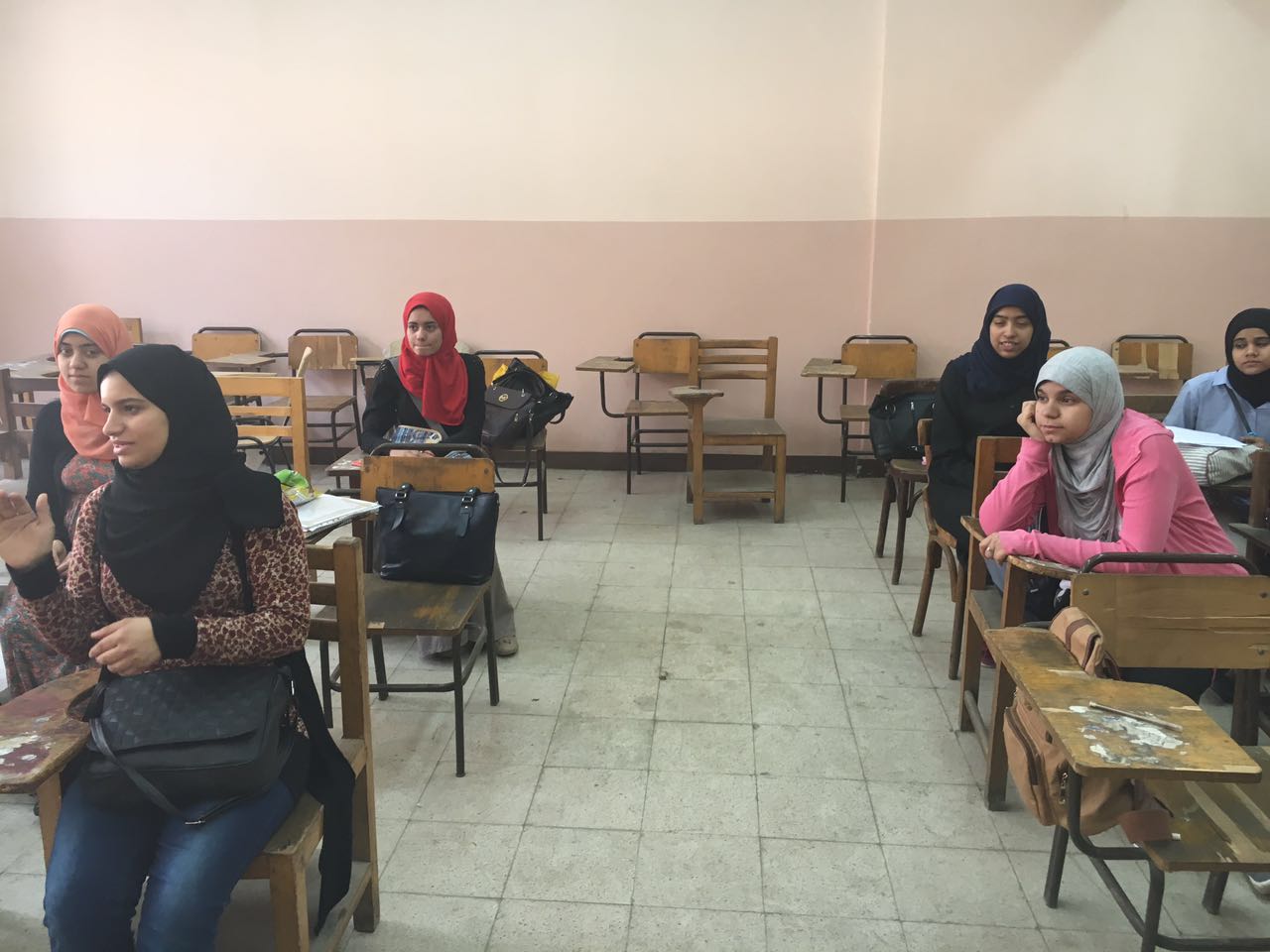
hot seat stratgy


some pictures for students in English class

 all students share in 
12/4/2016

playing based learning


            Defining ‘play’ 

While there is no one definition of play, there are a number of agreed characteristics that describe play. Play can be described as:

pleasurable-play is an enjoyable and pleasurable activity. Play sometimes includes frustrations, challenges and fears; however enjoyment is a key feature.

symbolic-play is often pretend, it has a ‘what if?’ quality. The play has meaning to the player that is often not evident to the educator.

active-play requires action, either physical, verbal or mental engagement with materials, people, ideas or the environment.

voluntary-play is freely chosen. However, players can also be invited or prompted to play process oriented-play is a means unto itself and players may not have an end or goal in sight.

self motivating-play is considered its own reward to the player.

Building a Curriculum Based on Children’s Play 


The teacher can take advantage of the children’s high interest and engagement in the block play by planning an entire curriculum unit around the topic of “Structures” and incorporating her standards-based goals and objectives for children’s learning into well-planned building play experiences. In order to do this the teacher:

• Sets up the environment to stimulate building play.

• Provides drawing and writing materials for documentation of building play and concrete materials for children to use in making three-dimensional representations of their buildings.


• Creates time in the daily schedule for discussion and reflection on shared and individual building.


• Uses teaching strategies that help children reflect on their building and think more deeply about the science involved.


Some images offered the students activities during the implementation of the strategy


prepared by : Zienab in 8/3/2016

brain storming


Brainstorming combines a relaxed, informal approach to problem solving with lateral thinking. It encourages people to come up with thoughts and ideas that can, at first, seem a bit crazy. Some of these ideas can be crafted into original, creative solutions to a problem, while others can spark even more ideas. This helps to get people unstuck by "jolting" them out of their normal ways of thinking.
Therefore, during brainstorming sessions, people should avoid criticizing or rewarding ideas. You're trying to open up possibilities and break down incorrect assumptions about the problem's limits. Judgment and analysis at this stage stunts idea generation and limit creativity.

Evaluate ideas at the end.........................
 Some images offered activities during the implementation of the strategy


prepared by : Wallaa & Mariem in 15/3/2016

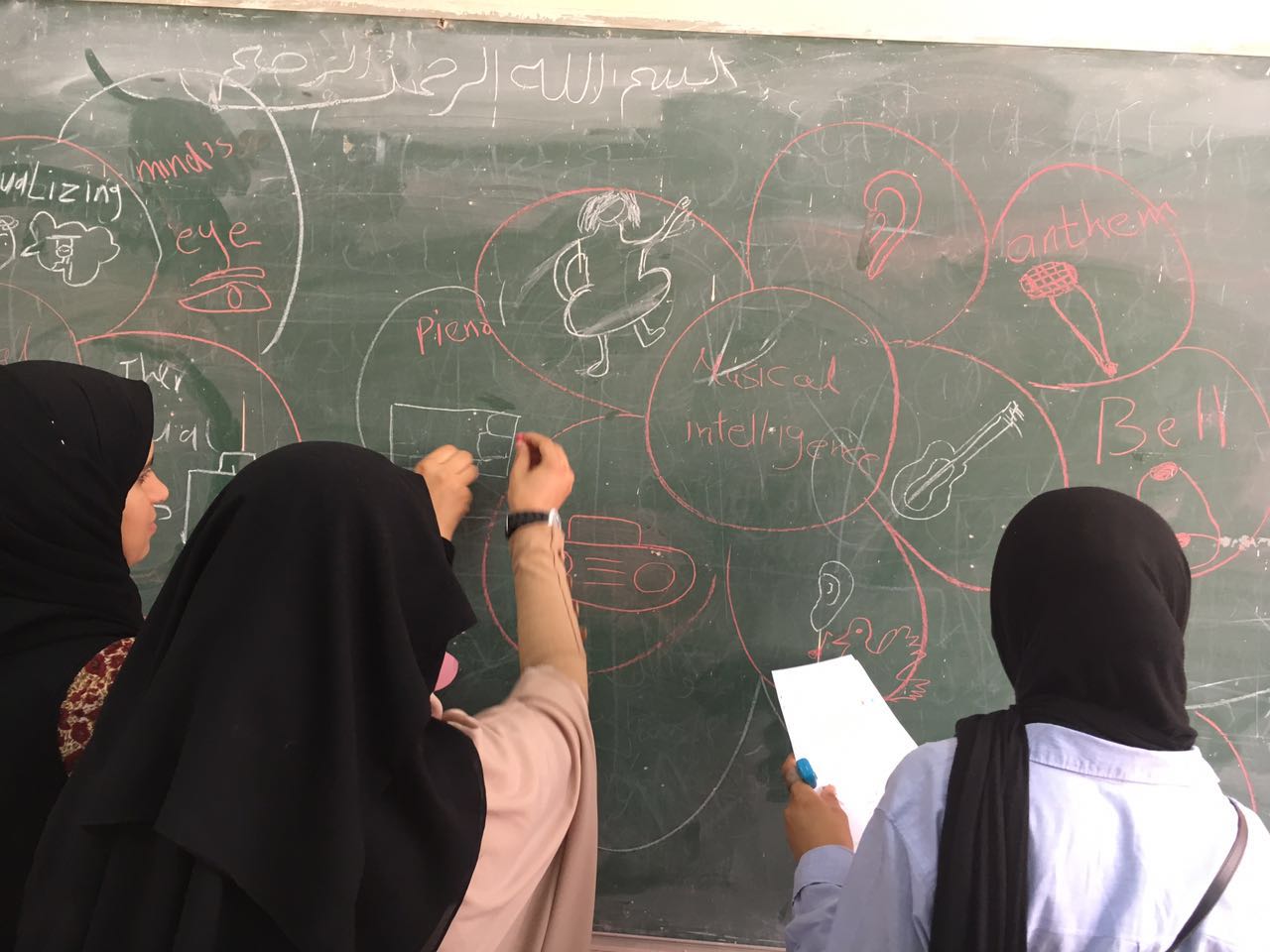
Mind Map


Discretion:
   Mind mapping is a highly effective way of getting information in and out of your brain. Mind mapping is a creative and logical means of note-taking and note-making that literally "maps out" your ideas.
One simple way to understand a Mind Map is by comparing it to a map of a city. The city center represents the main idea; the main roads leading from the center represent the key thoughts in your thinking process; the secondary roads or branches represent your secondary thoughts, and so on. Special images or shapes can represent landmarks of interest or particularly relevant ideas.
The Mind Map is the external mirror of your own radiant or natural thinking facilitated by a powerful graphic process, which provides the universal key to unlock the dynamic potential of the brain.
The five essential characteristics of Mind Mapping:

  • The main idea, subject or focus is crystallized in a central image.
  • The main themes radiate from the central image as 'branches'.*
  • *The branches comprise a key image or key word drawn or printed on its associated line.
  • *Topics of lesser importance are represented as 'twigs' of the relevant branch.
  • The branches form a connected nodal structure.*


  Prepared by : Asmaa, Shimaa, Alyaa & Yasmin in 29/3/2016

Creative Thinkers


Creative Thinkers
·         Consider rejecting standardized formats for problem solving.
·         Have an interest in a wide range of related and divergent fields.
·         Take multiple perspectives on a problem.
·         Use trial-and-error methods in their experimentation.
·         Have a future orientation.
·         Have self-confidence and trust in their own judgment.
    Critical Thinking Involves
·         Recognizing underlying assumptions.
·         Scrutinizing arguments.
·         Judging ideas.
·         Judging the rationality of these justifications by comparing them to a range of varying interpretations and prospective.
·         Providing positive as well as negative appraisal.

Multiple intelligences


1.    Verbal-Linguistic (Word Smart) – People who possess this learning style learn best through reading, writing, listening, and speaking. Verbal students absorb information by engaging with reading materials and by discussing and debating ideas.
2.    Logical-Mathematical (Logic Smart) – Those who exhibit this type of intelligence learn by classifying, categorizing, and thinking abstractly about patterns, relationships, and numbers.
3.    Visual-Spatial (Picture Smart) – These people learn best by drawing or visualizing things using the mind’s eye. Visual people learn the most from pictures, diagrams, and other visual aids.
4.    Auditory-Musical (Music Smart) – Students who are music smart learn using rhythm or melody, especially by singing or listening to music.
5.    Bodily-Kinesthetic (Body Smart) – Body-smart individuals learn best through touch and movement. These people are best at processing information through the body. Sometimes kinesthetic learners work best standing up and moving rather than sitting still.
6.    Interpersonal (People Smart) – Those who are people smart learn through relating to others by sharing, comparing, and cooperating. Interpersonal learners can make excellent group leaders and team players.
7.    Intrapersonal (Self Smart) – Intrapersonal-intelligent people learn best by working alone and setting individual goals. Intrapersonal learners are not necessarily shy; they are independent and organized.

8.    Naturalistic (Nature Smart) – Naturalistics learn by working with nature. Naturalistic students enjoy learning about living things and natural events. They may excel in the sciences and be very passionate about environmental issues.

Bloom Taxonomy


Applications for some pictures while applying the "Think ... Coupled .... strategy involved ."


prepared by : Asmaa, Eman, Amal, Aml in 19/4/2016